
An overview of how gas is measured and converted in strata schemes, and why correct methodology is essential for fair cost allocation.
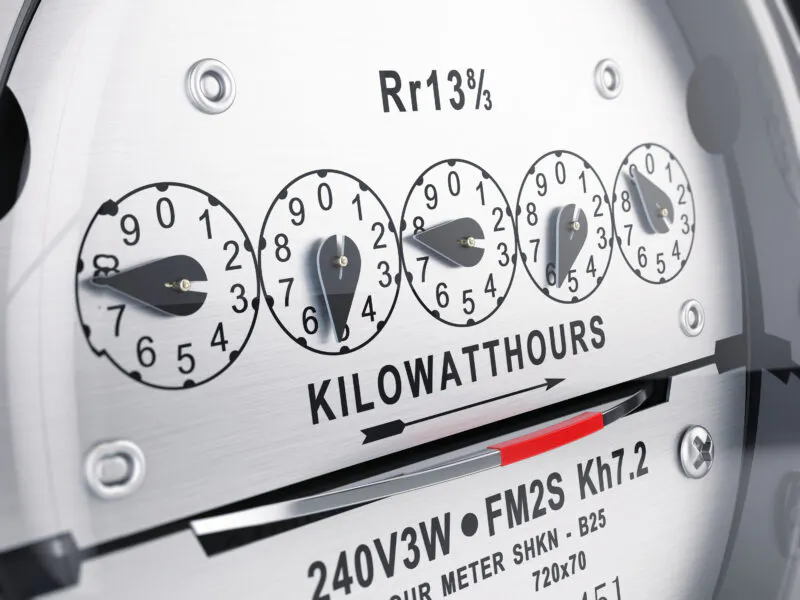
Gas sub-metering is increasingly common in Western Australian strata schemes, yet the way gas is measured, converted, and charged is still widely misunderstood.
This knowledge gap often leads to:
This article explains how gas is measured in Western Australia, why a conversion is required, and how strata schemes should apply that conversion to ensure fair, transparent, and accurate cost allocation.
This is practical, experience-based guidance, not a technical or legislative standard.
In Western Australia, gas meters, including sub-meters installed within strata schemes are measured in volume, not energy.
Most meters record gas usage in cubic metres (m³). In some older residential or commercial buildings, you may still encounter imperial meters that record usage in cubic feet (ft³).
However, gas retailers do not bill based on volume.
Retailers charge for energy, which is expressed in megajoules (MJ) (or sometimes gigajoules, GJ). This distinction is critical:
the number shown on the meter is not the number used for billing.
As a result, all gas usage must be converted from volume to energy before costs can be allocated.
Gas expands and contracts depending on:
Because these conditions vary across the network and over time, the energy content of one cubic metre of gas is not constant.
To account for this, retailers apply a conversion factor, which is made up of:
These components are combined into a single factor that appears on the gas bill.
Importantly, this factor can change each billing cycle.
Most gas sub-meters installed in strata schemes also measure volume (m³).
To allocate gas costs fairly, strata managers must replicate the retailer’s conversion process, not invent their own methodology.
If a scheme allocates costs using only raw m³ readings:
This is especially important where the retailer bills in MJ or GJ, not m³.
To ensure accuracy and transparency, the following steps should be applied consistently:
This final reconciliation step is critical. It ensures the strata company is neither under-recovering nor over-recovering gas costs.
Gas sub-metering is only fair when the conversion from volume to energy is applied correctly and consistently.
By aligning lot allocations with the retailer’s billing methodology, strata companies achieve:
This is the standard Veritas advocates: clarity, accuracy, and integrity in every operational process, to the fullest extent achievable.
Gas Sub-Metering: Part 2 – Common Errors, Reconciliation Issues, and Practical Fixes