
Practical guidance on calculating, validating, and applying gas conversion factors to ensure accurate strata sub-meter billing.
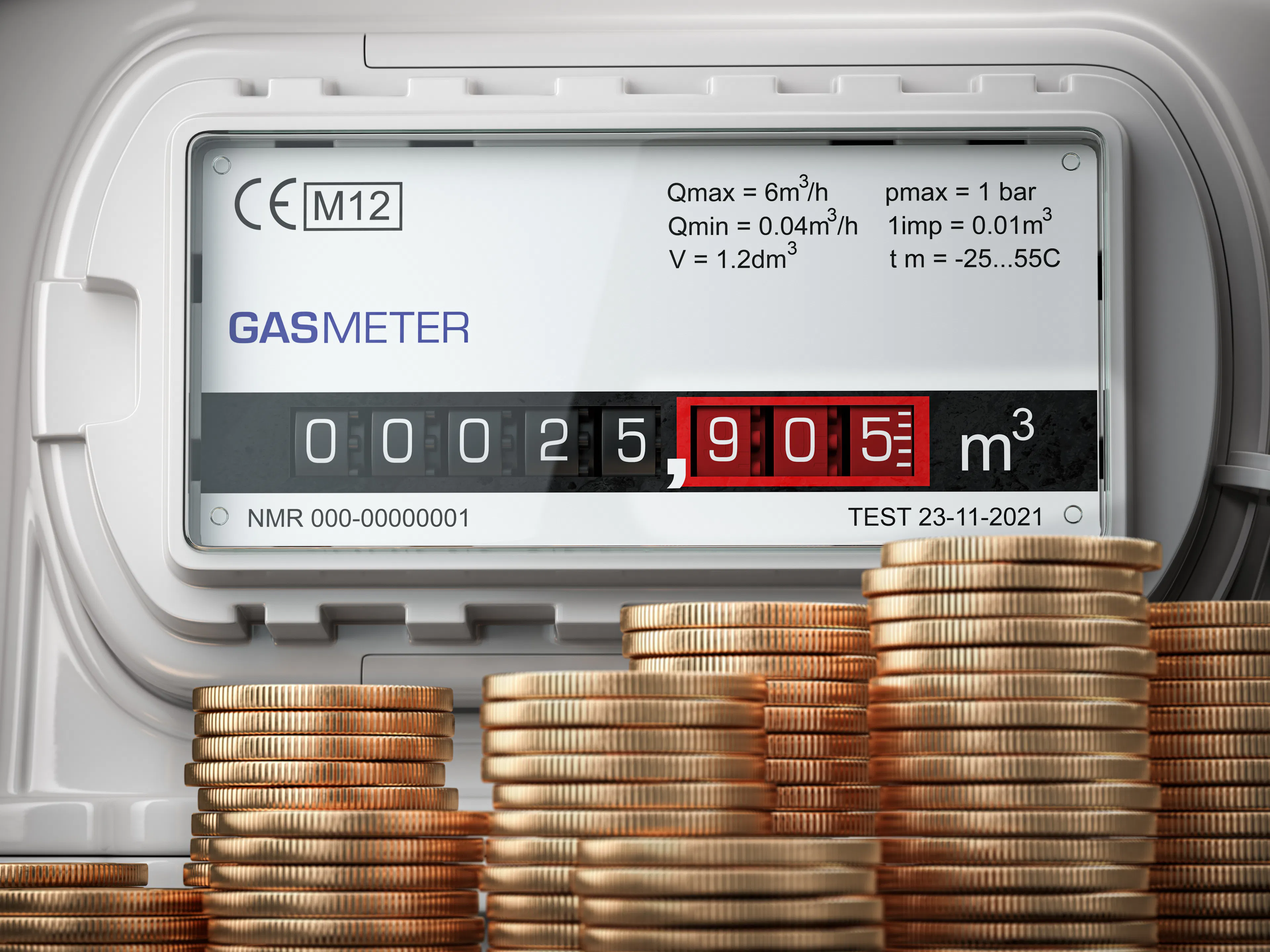
Sub-meters installed within strata schemes typically record gas consumption in cubic metres (m³). However, gas retailers bill based on energy, not volume. To generate accurate and defensible usage charges, sub-meter readings must be converted into an energy unit using the same conversion factor (or coefficient) applied by the gas retailer.
Understanding how this factor is derived, and how to verify it is essential for ensuring that gas charges allocated to each lot are fair, transparent, and consistent with the retailer’s bill.
While many strata managers rely on meter readers or third parties to perform this calculation, the process is straightforward once understood. Being able to validate it independently significantly reduces the risk of errors, disputes, and loss of owner confidence.
This article builds on Gas Sub-Metering Fundamentals in Strata and focuses on the practical application of conversion factors in real-world billing.
Gas volume alone does not represent cost.
Retailers convert volume to energy because the energy content of gas varies depending on:
For this reason, the conversion factor:
Using an incorrect factor can result in owners being over-charged or under-charged, even where sub-meter readings themselves are accurate.
To calculate the conversion factor, you need two consecutive gas retailer bills for the same strata scheme.
From those bills, identify:
By comparing the change in meter readings to the energy billed, you can determine the coefficient applied by the retailer for that period.
Sample Invoice #1
Billing period: 13 January to 12 February
Previous master meter reading (as at 12 February): 38,773

Sample Invoice #2
Billing period: 12 February to 14 March
Current master meter reading (as at 14 March): 39,193
Energy charged for the period: 4,534 MJ

Calculation for period 12 February to 14 March billing period:
Volume consumed (m³) = Current 39,193 − Previous 38,773 = 420 m³
Conversion factor (coefficient) = 4,534 MJ ÷ 420 m³ = 10.80
Rounded to two decimal places, the conversion factor to apply for this period is 10.80.
This coefficient represents how many megajoules of energy are attributed to each cubic metre of gas consumed during that billing cycle.
Retailer bills can express gas consumption in different units of measurement, such as:
The pricing line on gas retailer invoice often appears in a format like:
$x per y-unit of measurement
Always confirm the unit of measurement shown on the retailer’s bill before performing any calculations. Mixing units is a common source of billing errors.
Historically, some meter readers applied a fixed conversion factor (often 11.20) across all reporting periods.
This is not best practice.
The conversion factor fluctuates based on:
For this reason, it should be:
Periodic validation protects against systematic over-charging or under-charging and strengthens the defensibility of sub-meter allocations.
It is common for:
to not align perfectly.
While this complicates reconciliation, the retailer’s bill still provides a reliable benchmark. Compare the calculated coefficient against the closest matching billing period to confirm it remains reasonable.
Exact date alignment is ideal, but not always achievable.
Once the conversion factor has been calculated and validated, it must be applied correctly in your billing system.
Within the gas sub-meter setup, enter the calculated coefficient into the Coefficient field.
In the example above, this would be 10.80.
Enter the current readings for each lot. PropertyIQ calculates:
PropertyIQ applies the coefficient to convert volume (m³) into energy (MJ), aligning lot usage with the retailer’s billing unit.
Enter the retailer’s tariff rate and confirm whether it is GST-inclusive or exclusive.
If exclusive, GST must be added to avoid under-charging.
Always confirm system workflows remain current, as software updates may change functionality.
StrataMaster does not include a dedicated field for entering a conversion coefficient.
Instead:
Always confirm that:
Accurate gas sub-metering depends on more than reading meters.
It depends on understanding and correctly applying the conversion factor that turns volume into energy.
By regularly validating the coefficient, aligning calculations with retailer bills, and applying it consistently within billing systems, strata managers:
This level of diligence is central to best-practice sub-metering and reflects the standard Veritas advocates across all strata financial operations.